One of my favorite things about America is the multiple cultures, customs and traditions we share with our ancestors across the globe and there is no better time to honor your heritage than during your wedding. In part I of a two-part series on incorporating ethnic and cultural traditions into your wedding, I present you with ...
My Big, Fat Greek, Italian, Irish, Chinese Wedding: Traditions and Customs from Around the World.
Greek Wedding Customs
- For luck, abundance and a sweet marriage, a Greek bride carries a lump of sugar in her glove during the ceremony.
- To represent the Holy Trinity, the best man exchanges the rings between the bride and the groom three times.
- Two crowns made of either gold or twigs and orange blossoms are exchanged three times between the bride’s and groom’s heads.
- The crowned couple circles the church alter three times, representing their first steps together as a married couple.
For more Greek wedding customs, visit BrideHeaven.
Italian Wedding Customs
- It is customary for couples in northern Italy to walk to the wedding chapel together.
- To ward off evil spirits, an Italian groom carries a small piece of iron in his pocket.
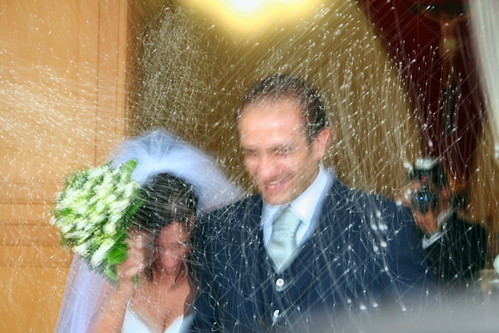
- White candied-covered almonds called confetti symbolize good luck and fertility and are often tossed at the couple as they exit the church. Confetti are also wrapped in mesh bags and distributed to guests during the reception.
- To “raise funds” during the wedding reception, the groom’s friends cut his wedding tie into small pieces and sell them to guests as mementos of the day.
For more Italian wedding customs, visit WeddingItaly.
Irish Wedding Customs
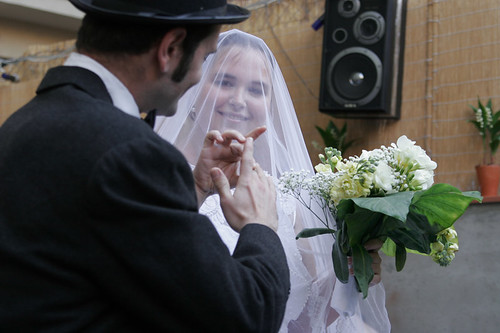
- Irish brides consider it bad luck to put on their own veil. Instead, they ask a happily-married woman to put it on for her.
- English lavender, a symbol of love, loyalty and devotion is often mixed into the bride’s wedding flowers.
- An Irish bride usually braids her hair for her wedding day to symbolize feminine power and luck.
- A wedding on Saint Patrick’s Day is considered to be the luckiest anniversary in Ireland.
- The bride usually wears a ring called a Claddagh, which is a crowned heart held by two hands, representing faith, honor and love. The ring’s motto is “Let love and friendship reign.”
For more Irish wedding customs visit IrelandInformation.
Chinese Wedding Customs
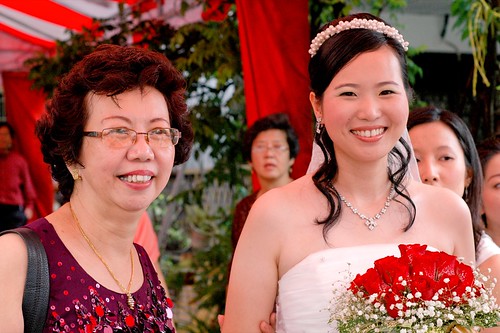
- Red signifies love, joy and prosperity and is central to a Chinese wedding.
- The bride’s gown is often red, as are the invitations, favor boxes and envelopes. The couple’s homes are decorated in red on the day of the wedding.
- A Chinese groom is symbolically dressed by his parents on the morning of his wedding.
- The groom visits the bride’s home on his way to the ceremony and presents her friends with a cash gift wrapped in red tissue in exchange for letting her go.
- The bride and groom travel to the ceremony together.
For more Chinese wedding customs visit ChineseWeddings.
Be sure to come back next week for fresh ideas on incorporating these traditions into your wedding.
Photos courtesy of clea teclea, pigliapost, xyldes and CeeKay
Tuesday, September 15, 2009
Ethnic and Cultural Wedding Traditions, Part I


Thursday, July 31, 2008
More Wedding Traditions and Touches
Last time we talked about some customs incorporated by American couples in their wedding ceremonies and wedding receptions. Here are some more that make your wedding day even more outstanding.
Irish Traditions
The groom is lifted up in a chair (called a jaunting chair) at the wedding reception to signify he is a married man. Often, the wedding couple is given a horseshoe for luck to display in their new home. A Claddagh ring - a ring decorated with two hands holding a heart and a crown above them - is the traditional Irish wedding ring.
Greek Traditions
During the wedding ceremony, the bride and groom wear crowns of flowers or "stephana” as King and Queen of the day and their household. Their sponsor -- koumbaros (man) or koumbara (woman) -- places these on their heads. Sometimes these sponsors are the Maid of Honor and Best Man, or they are given a special role in the wedding ceremony. Inviting a man or woman or even a couple to be koumbari is a very serious undertaking. This sponsor will be a permanent member of your extended family.
Polish Traditions
Guests who dance with the bride at the wedding reception are expected to place gifts of money (preferably in money holders) in the pocket of an apron she wears for the occasion.
When the bride is dressed and ready to put on her veil, she stands by a mirror and watches her mother put it on for her. This symbolizes the last task a mother does for her little girl before she becomes a woman with her own life.
Scottish Traditions
The groom gives the bride an engraved silver teaspoon on their wedding day as a promise they will never go hungry. At the reception a traditional sword dance is often performed.
Hispanic Traditions
A large rosary or white rope called a "laso" is wound around the couple’s shoulders in a figure-8 during the ceremony to symbolize their union. Sometimes an heirloom mantilla is used in place of the “laso.” Three bouquets are used - the bride carries one, one is left at the altar to home the Virgin Mary, and their third is tossed at the ceremony.
Jewish Tradition
At the end of a Jewish wedding ceremony, a cloth-wrapped wine glass is smashed as a reminder of the hardship endured by the Jewish people by the destruction of the Holy Temple in ancient Israel, and as a reminder of the fragility of love and marriage. As the glass breaks, everyone cries "mazel tov" (congratulations) and then it's off to the wedding reception.
Next time, let's talk about what customs you can create for your own traditions!
Wednesday, June 18, 2008
More Fun Wedding Customs
The word wedding comes from the ancient Greek meaning pledge or vow. This is perhaps the most solemn oath you can take - pledging your life and love to someone for life.
As a result, you invite all to witness the event and you photograph it and put it in an album to remember it always!
It's serious stuff, and all over the world, there have been traditions and customs established to make your union not only sacred but also ongoing!
An African wedding, more than anything, not only brings together two people as a single family, but combines two families or even the mixture of two tribes into one family unit. The concept of family is one of the unifying ideas of the African continent. Even though there are thousands of different types of ceremonies including Muslim, Christian, Jewish and even tribal, the bottom line in African weddings is that when two people marry, so do their families!
In Japanese weddings, purple is the color of love and a young bride may choose to wear an elaborately embroidered silk kimono covered in purple iris flowers. Weddings are traditionally either Shinto, during which the natural spirits, the Kami, are called upon to bless the couple, or it might be a Buddhist ceremony during which two strings of beads are interwoven, symbolizing the joining of two families into one.
A traditional groom, getting married in Malaysia, might send children bearing wedding presents to his future bride. These wedding gifts include elaborately displayed trays of food with origami flowers and cranes, made with paper currency.
Marriage in Iceland is very serious business. Couples are urged not to rush into matrimony. Long engagements are the norm, sometimes lasting three or four years. When the wedding finally did happen in the old days, it was customary for the groom to present his bride with a gift on the bridal bed. Today it is common for the bride to present the groom with a wedding bed gift.
Traditionally the bride would be waiting for her new husband wearing only her bridal headdress, which her new husband would remove. Once the couple was in bed together the priest would bless them one last time and the couple would drink from the bridal cups to seal their marriage.
These days, many Icelandic brides are opting for a more US or UK style of wedding and not the 14-day extravaganza that is part of their heritage!
Weddings differ from place to place, but they all start with a promise of a new life together.